But why is it so important to consider this connection in the titration bottle?
- Too much height will result in excessive stress on the seal, which can ultimately lead to leaks.
- Due to the large diameter, installation and placement in the housing is difficult.

How to choose the right size
Due to the high measurement error caused by the human factor, it is preferable to choose a small volume, equivalent to a 5-minute injection with a dosing pump. The higher the flow rate, the shorter the injection time.
PVC calibration column with overhang
Selection of the material of the calibration container
- Since the calibration tank is located on the suction line and the possibility of backflow of water and acid is low, PVC is usually sufficient.
- Usually we select the material of the double bottom calibration vessel according to the pipe.
- Pyrex glass is often the first choice for the Maher Fan Tool Company.
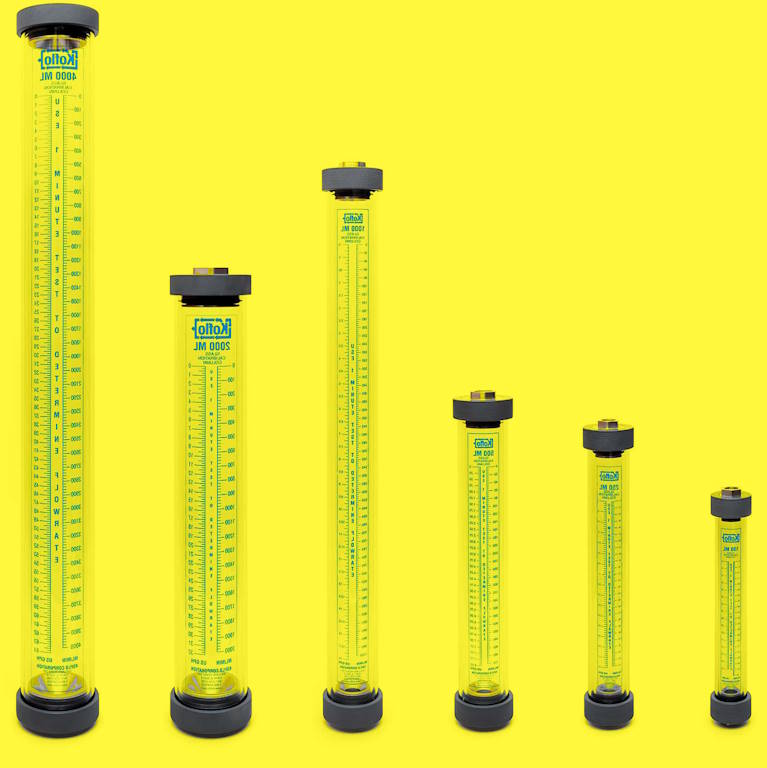
He represents
In modern industry, measurement accuracy is one of the most important factors for quality control and productivity. Any device measuring flow, pressure, temperature, or level must be calibrated regularly to ensure reliable results. Calibration tanks are an important tool for this. They play a key role in ensuring measurement accuracy and reducing operator errors, particularly in the oil and gas, petrochemical, energy, food, and pharmaceutical industries.
In this article we will discuss the calibration of potentiometers, the principles of their construction and the main points to pay attention to when preparing standard samples.
What is voltage calibration?
A calibration tank is a small, precision vessel or chamber used to calibrate flow meters and other liquid-measuring instruments. It serves as a volume or mass standard , allowing for accurate comparison of the instrument’s performance with the standard.
In short, when we want to ensure that a flow meter or measuring device is working properly, we pass the fluid through a calibration tank and compare its actual volume or mass with the instrument’s data.
Potentiometer calibration app
-
Oil and gas industry: Calibration of flow meters for the transportation of crude oil and natural gas
-
Chemical industry: Precise flow control of sensitive chemicals
-
Pharmaceutical and food industries: Ensuring precise dosing and mixing
-
Power plants: Calibration of water and steam systems to improve efficiency
-
Laboratories and research centers: Creating precise connections for research and development
Principles for the design of a potentiometer calibration
A standard potentiometer calibration must be based on sound engineering principles to ensure accurate, stable, and reliable results. The most important of these principles are:
-
Minute volume capacity
-
The tank volume must be specified very precisely (e.g. 5 liters or 10 liters).
-
The permissible error is normally less than ±0.05%.
-
-
Valve body material
-
Due to its corrosion resistance, stainless steel is the most popular choice.
-
Special steel grades such as 316L are used in the food and pharmaceutical industries.
-
-
Pressure and temperature resistance
-
Depending on the type of liquid, the tank must withstand high pressures or certain temperatures.
-
-
Standard input and output connectors
-
To avoid leaks and ensure stable flow, standard flanges or threaded connections should be used.
-
-
peephole
-
Display of liquid levels and control of calibration processes.
-
-
Control valves
-
For easier operation, install an inlet valve, an outlet valve and a drain valve.
-
Blacoh Calibration Column Installation and Operation Manual
Design steps for potentiometer calibration
The design of a professional calibration potentiometer includes the following steps:
1. Identify needs and opportunities
First, the fluid type and design flow rate for the tank must be determined. For example, a calibration tank for a crude oil flow meter requires a larger volume and a more robust construction.
2. Material selection
The material of the housing, valves and components should be selected according to the type of fluid (corrosive, acidic, viscous or toxic).
3. Mechanical design
-
The wall thickness is determined based on the calculated pressure.
-
Choose ASME or API safety standards.
-
Curved design for easy installation.
4. Hydraulic design
-
Calculation of the entry and exit paths of liquids.
-
Avoid air bubbles and back pressure.
-
Install ventilation ducts .
5. Installation of peripherals
-
The safety valve prevents overpressure.
-
Thermoelectric probes and pressure gauges for monitoring process conditions.
-
In some cases, liquid level sensors are used for automatic control.
6. Testing and verification
After production, the cookware must undergo a hydrostatic test, a pressure test, and a leak test. The results must then be compared with standard control values, and a calibration certificate is issued.
Technical and engineering safety tips for construction
-
The container should always be slightly larger than necessary to allow room for the liquid to expand.
-
For hazardous liquids (acidic, toxic or flammable), the design must minimize operator contact with the liquid.
-
Welds must be subjected to non-destructive testing to ensure that the structure has no leaks or weak points.
-
It is recommended to use corrosion-resistant exterior paint.
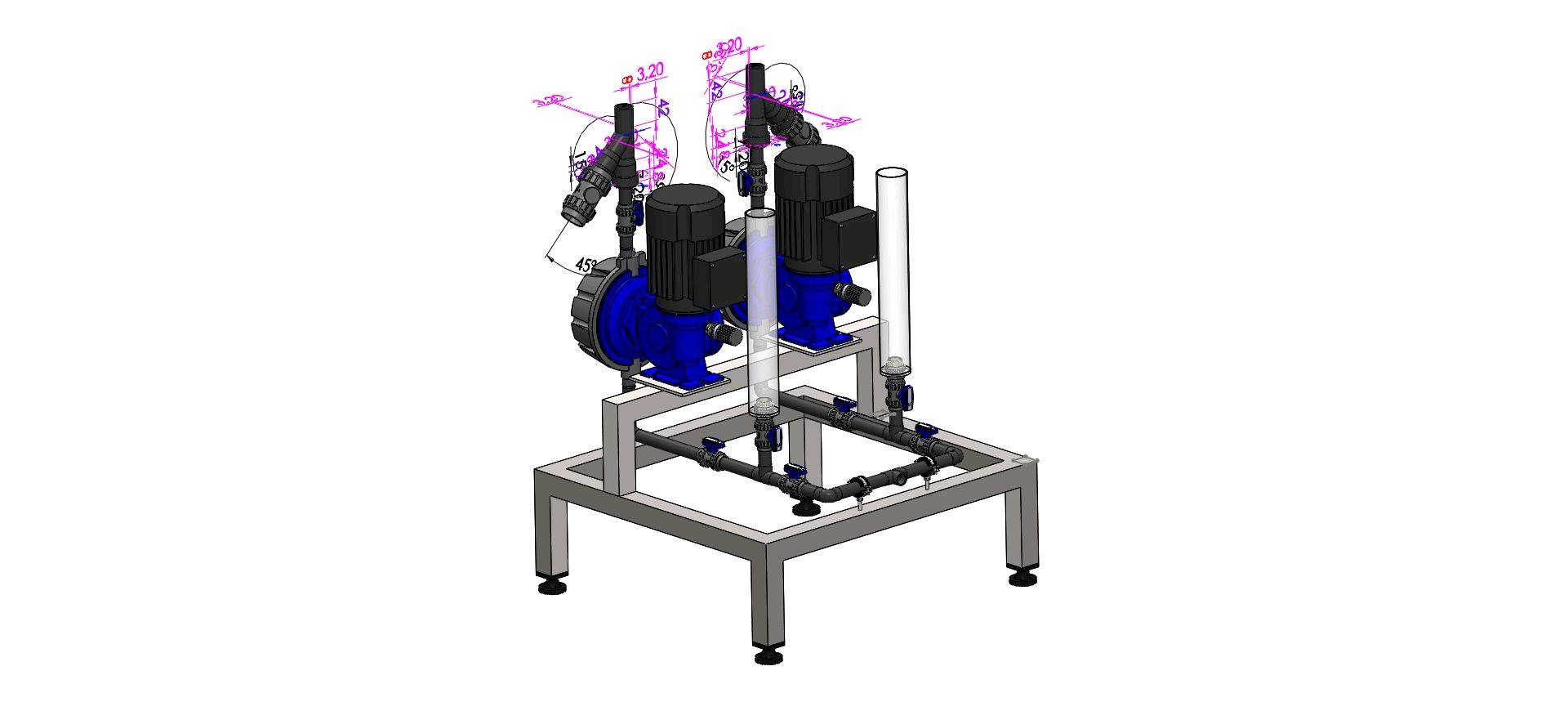
Advantages and disadvantages of a correct or incomplete construction
Benefits of proper design:
-
Improve calibration accuracy
-
Reducing costs due to measurement errors
-
Improving operational safety
-
Extend the lifespan of measuring instruments
Disadvantages of the unfinished design:
-
which leads to large measurement errors
-
Risk of leaks or explosions under high pressure conditions
-
Increased maintenance costs
-
Risks for operators

Finally
Calibration tanks are critical equipment in many industries and directly influence measurement accuracy and process quality. Proper design requires knowledge of mechanics, metallurgy, and process engineering. Selecting the appropriate capacity, ensuring the durability of construction materials, adhering to pressure and temperature standards, and conducting precise tests are crucial steps in the design of a standard calibration tank.
Ultimately, investing in proper calibration design and implementation will not only improve accuracy and safety, but will also save money and increase productivity in the long run.