- Lip contact
- Screw terminal
- Butt welding and terminal welding
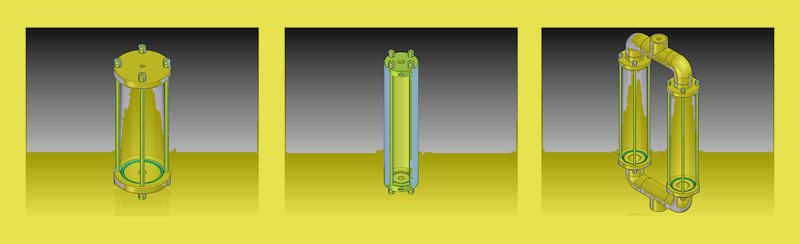
Introduction: The Importance of Accurate Calibration in Chemical Injection
Chemical injection systems play a critical role in a wide range of industrial processes, from water treatment to oil and gas. At the heart of these systems are calibration cylinders that ensure the accuracy and efficiency of injection processes. Choosing the right method to connect these cylinders to the injection device has a direct impact on the accuracy, safety, and reliability of the system.
Connection types for calibration cylinders
1. Direct contact (lip contact)
Features:
-
Use standard edges (ANSI, DIN, ISO)
-
Suitable seals for sealing (PTFE, graphite)
-
Precise alignment of cylinder and pump is required.
Feature:
-
High mechanical strength
-
Suitable for high working pressures (up to 100 bar)
-
Einfach zu zerlegen und zu reparieren.
Mangel:
-
Für die Installation wird mehr Platz benötigt.
-
Teurer als andere Methoden
2. Schraubverbindung
Stream-Typ:
-
Zylindrisches Gewinde (NPT, BSPP)
-
Conical thread (BSPT, NPTF)
Technical considerations:
-
Use Teflon tape or sealant.
-
Correct tightening torque for connections
-
Working pressure limits (usually up to 40 bar)
Common uses:
-
Low pressure system
-
Tragbare Verpackung
-
Narrow spatial environment
3. Quick release
Connection:
-
Voucher
-
Type of lock
Special features:
-
Schnelles Verbinden und Trennen (weniger als 30 Sekunden)
-
Reduzieren Sie Systemausfallzeiten
-
Geeignet für häufigen Zylinderwechsel.
Vorsichtsmaßnahmen:
-
Überprüfen Sie den Verdichtungszeitraum
-
Hochspannungsgrenzen
-
Eine regelmäßige Reinigung ist erforderlich.
Factors influencing the choice of delivery method
1. Working parameters
-
Working pressure range : from 1 to100 bar
-
Processing temperature : from -20 to 150°C
-
Chemical Type : Corrosion, Viscosity
2. Security considerations
-
Risk of chemical leakage
-
Requirements for double-walled systems
-
Avoid overpressure
3. Maintenance Requirements
-
Cylinder Replacement Period
-
Easy access
-
long-term operating costs
Accessories for a perfect connection
1. Globe valve
-
Ball valve
-
Needle valve
-
Diaphragm valve
2. Flexible connection
-
High Pressure Hose
-
Expansion joints
-
Schwingungsdämpfende Kupplung
3. Dichtungssystem
-
Viton- und EPDM-Dichtringe
-
mechanische Befüllung
-
magnetische Flüsse
Kommunikationsstandards
1. Internationale Standards
-
ASME B16.5 Flansch
-
Gewindeverbindungen nach ISO 1179
-
DIN 28401 Vakuumanschluss
2. Sicherheitsregeln
-
API 675 für Einspritzpumpen
-
EN 13480 Industrial Pipes
-
Chemical Safety in the Occupational Health and Safety Authority
3. Material standards
-
ASTM A182 Steel Alloys
-
NACE MR0175 for aggressive environments
-
Food and drug applications to the FDA
 Lösungen für häufige Verbindungsprobleme
1. Chemikalienlecks
2. Low calibration accuracy
-
Check if the connection is dirty.
-
System recalibration
3. Joint erosion
-
Choosing the Right Material
-
Use a protective layer
-
Regular inspection
Technological innovations in communication systems
1. Smart connection
-
Automatic warning system
-
Drucküberwachung in Echtzeit
2. Moderne Materialien
-
korrosionsbeständige Verbundwerkstoffe
-
verstärktes Polymer
-
Nanobeschichtung
3. Integriertes Design
-
Plug-and-Play-System
-
Mehrzweckstecker
-
Platzsparende Lösung
Ergebnis: Auswahl der besten Lösung
Choosing the right method to connect the calibration gas cylinder to the chemical injection unit requires careful consideration of technical, safety and economic criteria. While flange connections are best suited for continuous high-pressure applications, quick couplings may be a better option for systems with frequent bottle changes.
Final technical tips:
-
Always use materials and equipment that meet industry standards.
-
Develop a program for regular inspections and preventive maintenance.
-
For specific application requirements, contact experienced engineers.
-
Consider upgrading your system to keep up with technological advancements.
By selecting and correctly implementing the right connection method, you will achieve the accuracy and reliability of your chemical injection system that you need, avoiding additional costs from downtime and unnecessary repairs.