The volume of a cylinder corresponds to its capacity and is determined by measuring the amount of material it contains. In engineering, there is a specific formula for calculating the volume of a cylinder that can be uniformly immersed in any quantity of liquid or solid. A calibration cylinder is a three-dimensional body with two congruent and parallel bases. Cylinders come in various designs, including:
- Right circular cylinder: A calibrated cylinder whose bases are circles and in which every straight line that is part of the curved lateral surface is perpendicular to the bases.
- Oblique cylinder: A cylinder whose sides are curved at the base at an angle that is not a right angle.
- Elliptical cylinder: a cylinder whose base is an ellipse.
- Straight circular hollow cylinder: This is a cylinder consisting of two straight circular calibrated cylinders, one of which is nested inside the other.
The formula for calculating the volume of a cylinder is V = πr²h. We will examine this formula in more detail in the following sections.
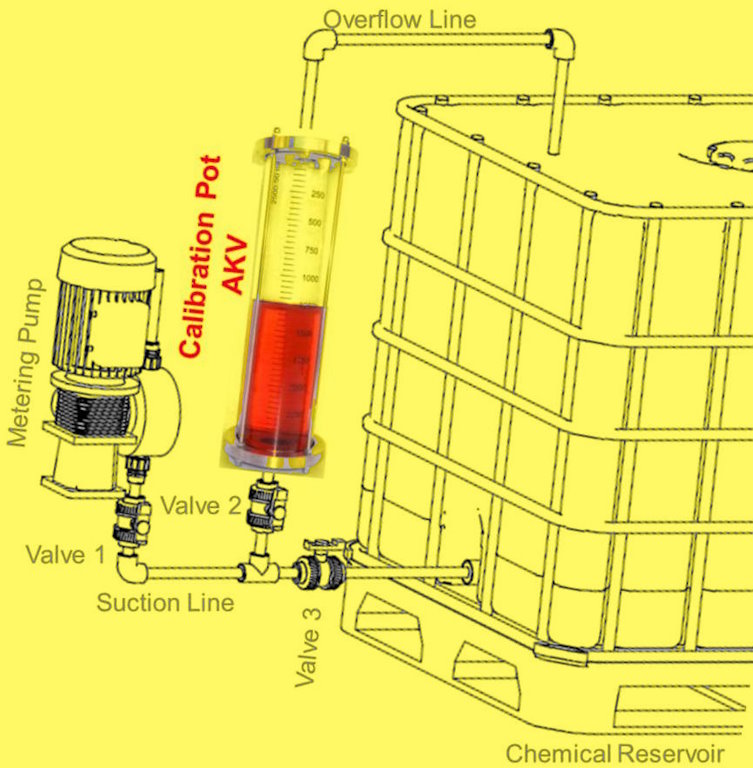
What is the volume of the cylinder?
The volume of a cylinder is equal to the number of cubic units (cubes of unit length) it can hold. The space occupied by a cylinder is measured in cubic units because the volume of any three-dimensional object corresponds to the space it occupies. Cylinder volumes are given in cubic units such as cubic centimeters, cubic meters, cubic feet, etc. Let’s now look at the formula for calculating the volume of a cylinder.
Definition of a cylinder
A cylinder is a three-dimensional body consisting of two parallel bases connected by a curved surface. These bases are circular disks. The straight line passing through or connecting the centers of the two disks is called the axis of the calibration cylinder.

Formula for cylinder volume
We know that a cylinder is similar to a prism (note that a calibrated cylinder is not a prism because it has a curved lateral surface). To calculate the volume of a cylinder, we use the same formula as to calculate the volume of a prism. We know that the volume of a prism is calculated using the following formula:
V = A × h, where
- a = area of the base
- h = height
Using this formula, the following formula for the volume of a cylinder is obtained:
- Formula for the volume of a right circular cylinder: V = πr²h (r = radius, h = height).
- The formula for the volume of a diagonally calibrated cylinder is V = πr²h (r = radius, h = height).
- The formula for the volume of an elliptical cylinder is: V = πbh (a and b = radius, h = height).
- The formula for the volume of a right circular hollow cylinder is: V = π(R² – r²)h (R = outer radius, r = inner radius, h = height).

Now we use the formula V = A × h to calculate the volume of several cylinders.
Formula for the volume of a right circular cylinder
We know that the base of a right circular cylinder is a circle and the area of a circle with radius r is equal to πr². Therefore, the volume of a right circular cylinder (V) is, according to the formula given above (V = A × h), equal to:
V = πr² hours
Here,
- “r” is the radius of the base (circle) of the calibration cylinder.
- ‘h’ is the height of the cylinder.
- π is a constant with the value 22/7 (or) 3.142.
Therefore, the volume of a cylinder is directly proportional to its height and the square of its radius. That is, if the radius of a cylinder is doubled, its volume quadruples.
Formula for calculating the volume of a diagonal cylinder
The formula for calculating the volume of a diagonal cylinder is the same as the formula for calculating the volume of a right circular cylinder. Therefore, the volume (V) of a diagonal cylinder with base radius ry and height h is:
V = πr² hours
Formula for calculating the volume of an elliptical cylinder
We know that an ellipse has two radii. We also know that the area of an ellipse with radii a and b is equal to πb². Therefore, the volume of an elliptical cylinder is equal to πb².
V = πbh
Here,
- “a” and “b” are the radii of the base (ellipse) of the cylinder.
- “h” is the height of the cylinder.
- π is a constant with the value 22/7 (or) 3.142.
Formula for the volume of a right circular hollow cylinder
Since a right hollow cylinder consists of two overlapping right circular cylinders , its volume is calculated by subtracting the volume of the inner cylinder from the volume of the outer cylinder. Therefore, the volume of a right hollow cylinder is
V = π(R² – r²)h
Here,
- “R” is the radius of the outer base of the cylinder.
- “r” is the radius of the inner base of the cylinder.
- “h” is the height of the cylinder.
- π is a constant with the value 22/7 (or) 3.142.

How do you calculate the volume of a cylinder?
Here are the steps to calculate the volume of a cylinder:
- Specify the radius “r” and the height “h” and make sure that both are given in the same units.
- Let’s insert the values into the volume formula V = πr²h.
- Specify the units of measurement in cubic units.
Example: Calculate the volume of a right circular cylinder with a radius of 50 cm and a height of 1 m. Use π = 3.142.
Solution:
The radius of the cylinder is r = 50 cm.
Its height h = 1 meter = 100 centimeters.
Its volume is V = πr²h = (3,142)(50)²(100) = 785500 cm³.
Note: To determine the volume of a cylinder depending on its type, we use the following formula, as mentioned in the previous section. We assume it is a right circular cylinder unless another type is specified and apply the following formula to calculate the cylinder’s volume: V = πr²h.
Important points regarding cylinder size:
- The volume of a cylinder is calculated using the formula V = πr²h, where r is the radius of its circular base and h is the vertical distance (height) between the centers of the two bases.
- If the diameter (d) is given, calculate the radius (r) using the formula r = d/2 and then insert it into the formula above to calculate the volume of the cylinder.
